
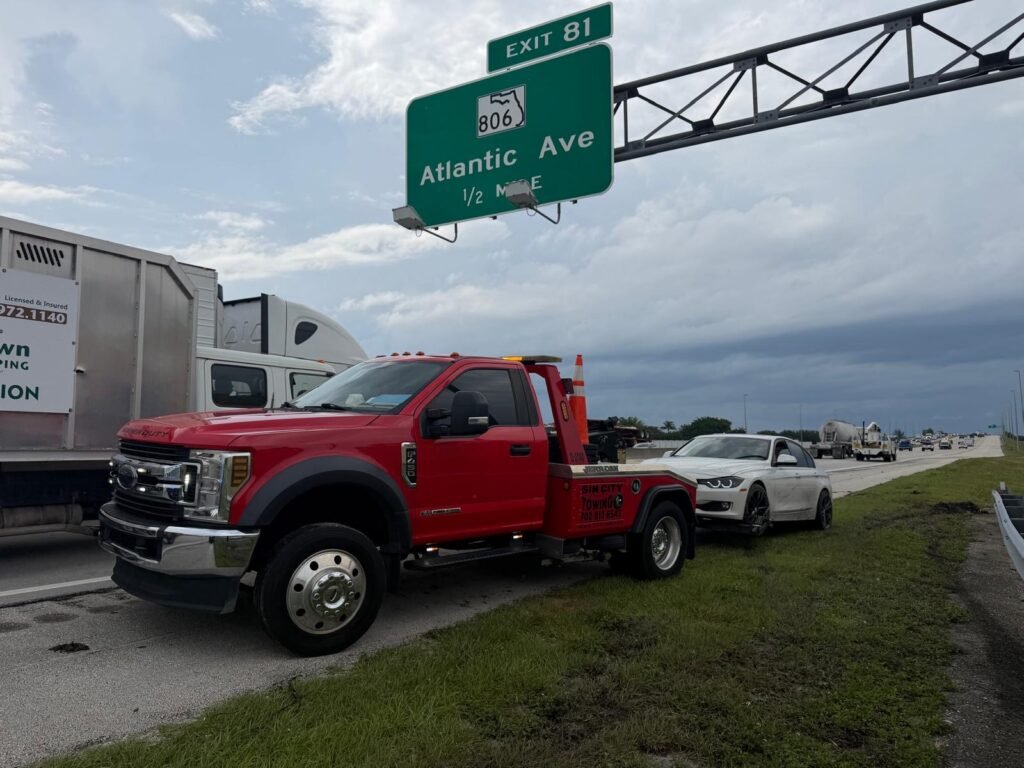
Why So Many Calls Come From South Miami-Dade After Heavy Rain
It’s a familiar scene across South Miami-Dade. The sky darkens, the wind picks up, and within minutes, sheets of rain are pounding the pavement. Streets flood. Visibility drops to near zero. And before the storm even passes, our phone starts ringing. And ringing. And ringing.
At Sin City Towing LLC, we’ve noticed a clear pattern: after heavy rain, our call volume spikes dramatically. Drivers who were fine an hour ago are suddenly stranded on the Turnpike, stuck in flooded intersections, or dealing with accidents caused by slick roads.
South Miami-Dade is particularly vulnerable to heavy rain. Its geography, infrastructure, and driving patterns create a perfect storm of hazards. In this guide, we’ll explain why so many calls come from South Miami-Dade after heavy rain, what the most common emergencies are, and how you can stay safe during and after a storm.
Why South Miami-Dade Is Particularly Vulnerable
Before we dive into the specific emergencies, let’s understand what makes South Miami-Dade so susceptible to rain-related breakdowns.
The Geography
South Miami-Dade is low-lying and flat. Much of the area sits just a few feet above sea level. When heavy rain falls, the water has nowhere to go. It pools on roads, floods intersections, and creates dangerous driving conditions.
The Drainage Infrastructure
While Miami-Dade County has an extensive drainage system, it’s not designed to handle the kind of intense rainfall we’ve been seeing more frequently. When rain falls faster than the system can drain, streets flood quickly. Underpasses, low-lying roads, and areas near canals are particularly vulnerable.
The Roads
South Miami-Dade has a mix of urban and rural roads. Many rural roads have poor drainage and can flood quickly. Even major roads like the Turnpike, Kendall Drive, and Campbell Drive can have standing water during heavy rain.
The Driving Habits
South Miami-Dade drivers are used to sun, not rain. When storms hit, many drivers don’t adjust their driving habits. They drive too fast, follow too closely, and don’t leave enough stopping distance. This leads to accidents and breakdowns.
The Heat
South Miami-Dade’s heat doesn’t disappear when it rains. If anything, the combination of heat and humidity creates a sauna-like environment. Vehicles that are already stressed by the heat are more likely to fail when rain adds additional challenges.
The Overseas Highway Gateway
South Miami-Dade is the gateway to the Florida Keys. Thousands of drivers pass through on their way to and from the Keys. When heavy rain hits, these drivers—many of whom are tourists unfamiliar with the area—are at increased risk.
The Most Common Rain-Related Emergencies
Based on our years of service, here are the emergencies we see most often after heavy rain.
Hydroplaning and Loss of Control
Hydroplaning occurs when a layer of water builds up between your tires and the road, causing your vehicle to lose traction. When this happens, you lose control of steering and braking.
Why it happens in South Miami-Dade: South Miami-Dade’s roads are often flat with poor drainage, allowing water to pool. Heavy rain reduces traction, especially on worn tires.
What to watch for: Your steering feels light, your car drifts, or you feel a loss of control.
What to do: Don’t slam on the brakes. Take your foot off the gas. Steer gently in the direction you want to go. Let your vehicle slow down naturally.
What happens if you don’t respond properly: You could spin out, hit another vehicle, or leave the road entirely.
How to prevent it: Slow down in rain. Leave extra following distance. Make sure your tires have good tread depth.
Accidents and Collisions
Heavy rain reduces visibility and makes roads slippery. Accidents increase dramatically.
Why it happens in South Miami-Dade: Distracted driving, speeding, worn tires, and sudden stops all contribute. Rain makes everything worse.
What to watch for: Other vehicles braking suddenly, standing water, or reduced visibility.
What to do: If you’re in an accident, check for injuries. Call 911 if needed. Move to a safe location if possible. Call emergency towing Miami-Dade County services.
How to prevent it: Slow down. Leave extra space. Use your headlights. Don’t drive through standing water.
Stalled Vehicles in Flooded Roads
Driving through standing water is one of the most common—and most avoidable—mistakes we see.
Why it happens in South Miami-Dade: Drivers underestimate the depth of water. They think they can make it through, but water enters the engine, stalls the car, and leaves them stranded. Sometimes, a single foot of water can float a vehicle.
What to watch for: Water that’s deeper than the bottom of your doors. Water moving fast enough to sweep your vehicle away.
What to do: Turn around, don’t drown. Don’t drive through standing water if you can’t see the road beneath it. If your car stalls in water, don’t try to restart it—you could hydrolock the engine.
What happens if you ignore it: You could stall your vehicle, damage your engine, and need a tow. In some cases, you could be swept away.
How to prevent it: Don’t drive through flooded roads. Find an alternate route.
Dead Batteries
Dead batteries are always common, but they spike after heavy rain.
Why it happens in South Miami-Dade: Rain and humidity can cause electrical issues. If your battery is already weak, the moisture can accelerate its failure. Also, using windshield wipers, headlights, and the defroster all put extra strain on the battery.
What to watch for: Slow cranking, dim lights, or a warning light.
What to do: Try a jump start if you have cables and a helper. If that doesn’t work, call for a tow truck Miami-Dade service.
How to prevent it: Have your battery tested regularly. Replace it every three years. Keep your battery terminals clean and free of corrosion.
Electrical System Failures
Heavy rain can cause electrical gremlins. Moisture can get into connectors and cause shorts or malfunctions.
Why it happens in South Miami-Dade: Humidity and rain can cause corrosion. If your vehicle has pre-existing electrical issues, rain can make them worse.
What to watch for: Flickering lights, dashboard warning lights, windows that won’t roll down, or systems that stop working.
What to do: If the car is drivable, get it to a mechanic. If not, call for a tow.
How to prevent it: Keep your vehicle’s electrical system inspected regularly. Avoid driving through deep water.
Flat Tires from Storm Debris
Heavy rain brings debris onto the roads—branches, nails, construction materials, and more.
Why it happens in South Miami-Dade: Storms bring down trees and scatter debris. Construction areas are especially vulnerable.
What to watch for: A thumping sound, your car pulling to one side, visible deflation, or a low tire pressure warning light.
What to do: Pull over safely. If you have a spare and know how to change it, proceed. If not, call for a tow truck Miami-Dade service.
How to prevent it: Watch the road ahead and avoid debris when possible. Check your tires regularly.
Engine Problems from Water Ingestion
Driving through deep water can allow water to enter your engine. This is called hydrolocking.
Why it happens in South Miami-Dade: Drivers underestimate water depth and drive through flooded roads. Water enters the air intake, gets into the cylinders, and hydro locks the engine.
What to watch for: Water splashing over your hood, a stalled engine, or a sudden loss of power.
What to do: If you drive through water and your car stalls, don’t try to restart it. Call for a roadside assistance Miami-Dade service.
What happens if you ignore it: Hydrolocking can destroy your engine. Repairs can cost thousands.
How to prevent it: Don’t drive through standing water. Turn around, don’t drown.
Transmission Issues
Water can get into your transmission, causing slipping, rough shifting, or complete failure.
Why it happens in South Miami-Dade: Driving through deep water can force water into the transmission through the vent tube or seals.
What to watch for: Slipping gears, delayed engagement, rough shifting, or a warning light.
What to do: If you notice any transmission issues, stop driving and call for a tow.
How to prevent it: Don’t drive through deep water. If you must drive through water, do so slowly and carefully.
Brake Problems
Water and moisture can affect your brakes. Wet brakes are less effective, and water can damage brake components.
Why it happens in South Miami-Dade: Driving through water can saturate brake pads and drums. Moisture can cause rust and corrosion.
What to watch for: A soft or spongy brake pedal, reduced stopping power, or grinding sounds.
What to do: Dry your brakes by lightly applying them while driving at low speed. If issues persist, have them inspected.
How to prevent it: Avoid driving through deep water. Have your brakes inspected regularly.
Alternator Issues
Moisture and water can damage your alternator, which charges your battery.
Why it happens in South Miami-Dade: Water can get into the alternator, causing it to fail.
What to watch for: Dimming lights, electrical issues, or a dead battery.
What to do: If your alternator is failing, get it replaced. If your car dies, call for a tow.
How to prevent it: Avoid driving through deep water. Have your alternator tested regularly.
Stuck in Mud or Dirt
Heavy rain turns dirt and gravel into mud. Rural roads become treacherous.
Why it happens in South Miami-Dade: South Miami-Dade has many unpaved and rural roads. When it rains, these roads turn into mud pits.
What to watch for: Loss of traction, wheels spinning, or your vehicle sinking.
What to do: Don’t spin your wheels—you’ll dig yourself in deeper. Call for winching and recovery.
How to prevent it: Avoid rural roads during heavy rain. If you must drive on them, reduce your speed.
Why South Miami-Dade Drivers Call After Rain
Here’s a breakdown of why specific areas in South Miami-Dade see surges in calls after heavy rain.
The Turnpike
Why it’s vulnerable: The Turnpike has stretches with poor drainage. Standing water can cause hydroplaning. Accidents spike during rain.
Common emergencies: Hydroplaning-related accidents, stalled vehicles, and flat tires.
What we see: A surge in calls from drivers who lost control or whose vehicles stalled in water.
Kendall
Why it’s vulnerable: Kendall has heavy traffic and many intersections. Sudden rain catches drivers off guard. Flooding is common on side streets and underpasses.
Common emergencies: Accidents, flooded vehicles, and dead batteries.
What we see: Many calls from Kendall Drive and the Turnpike.
Cutler Bay
Why it’s vulnerable: Cutler Bay has low-lying areas and old drainage systems. Flooding is common on roads like Old Cutler Road.
Common emergencies: Stalled vehicles in flooded streets and dead batteries.
What we see: Many calls from low-lying residential areas.
Homestead
Why it’s vulnerable: Homestead has a mix of urban and rural roads. Rural roads flood quickly. Agricultural debris is carried onto roads.
Common emergencies: Stalled vehicles, flat tires, and stuck vehicles.
What we see: Many calls from Campbell Drive and rural roads.
Florida City
Why it’s vulnerable: Florida City is the gateway to the Keys. Many drivers pass through and aren’t prepared for the weather. Rural roads flood quickly.
Common emergencies: Stalled vehicles, flat tires, and hydroplaning accidents.
What we see: Many calls from Palm Drive, Krome Avenue, and the Turnpike.
The Overseas Highway
Why it’s vulnerable: This is a long, remote road with limited services. Rain causes poor visibility and hydroplaning.
Common emergencies: Hydroplaning accidents, overheating, and flat tires.
What we see: Calls from drivers on bridges and remote stretches.
How to Stay Safe During Heavy Rain
Here are essential tips for driving in South Miami-Dade’s heavy rain.
Slow Down
Speed limits are for ideal conditions. In heavy rain, reduce your speed. Give yourself more time to react.
Turn on Your Headlights
Florida law requires headlights when visibility is reduced. Headlights help you see and be seen. Don’t use high beams—they reflect off the rain.
Increase Following Distance
Wet roads increase stopping distance. Leave at least 4-5 seconds of following distance.
Avoid Standing Water
Turn around, don’t drown. A single foot of water can float your vehicle. Six inches of water can reach the bottom of your vehicle and cause stalling.
Don’t Drive Through Flooded Roads
If you can’t see the road beneath the water, don’t drive through it. Find an alternate route.
Stay In Your Lane
Heavy rain makes lane markings hard to see. Stay in your lane and avoid sudden lane changes.
Turn Off Cruise Control
Cruise control can cause your wheels to spin faster when hydroplaning. Turn it off in rain.
Use Your Defroster
Keep your windows clear. Use the defroster and A/C to reduce fog.
Be Extra Cautious on Bridges
Bridges freeze more quickly and can be slippery. Slow down and avoid sudden movements.
Pull Over If Necessary
If rain makes it impossible to see, pull over to a safe location (off the road) and wait it out. Turn on your hazard lights.
What to Do If You Break Down in Heavy Rain
If you’re stranded during heavy rain, follow these steps.
Step 1: Pull Over Safely
Get as far off the road as possible. Avoid stopping near water or in low-lying areas.
Step 2: Turn on Your Hazard Lights
Alert other drivers that you’re stopped. In heavy rain, visibility is low.
Step 3: Stay Inside Your Vehicle
Your car is the safest place to wait. Do not get out in the rain on the side of a busy road.
Step 4: Call Sin City Towing LLC
We provide fast, reliable roadside assistance Miami-Dade services. We’re available 24/7, including during storms.
Step 5: Wait Safely
Stay in your vehicle with your seatbelt on. Keep your hazard lights on. Stay calm.
Step 6: Don’t Attempt Repairs Yourself
In heavy rain, attempting repairs is dangerous. Wait for a professional.
Why Sin City Towing LLC Is the Best Choice During Rain
When you break down during a storm, you want a towing company that’s fast, reliable, and experienced.
We’re Available 24/7, Including Storms
Rain doesn’t stop us. We’re available around the clock, no matter the weather.
We’re Fast
We understand that every minute counts when you’re stranded in a storm. We prioritize quick response times.
We Know South Miami-Dade
We know the roads, the trouble spots, and the best routes. We can find you even in heavy rain.
We Have the Right Equipment
Our trucks are equipped for all weather conditions. We can handle any emergency.
We’re Professional
Our drivers are experienced, licensed, and insured. We treat your vehicle with care and you with respect.
We’re Affordable
We believe in fair, transparent pricing. No hidden fees, no surprises.
We’re the Emergency Towing Miami-Dade County Service Drivers Trust
When you need emergency towing Miami-Dade County services during a storm, we’re the company South Miami-Dade drivers trust.
Real Stories from South Miami-Dade Drivers
Here are a few real calls we’ve received after heavy rain.
The Stalled Car in Kendall
A Kendall driver tried to drive through a flooded underpass and stalled her car. Water was up to her doors. She called us, and we arrived quickly. We winched her vehicle out of the water and towed it to a mechanic. The car needed extensive repairs, but she avoided hydrolocking the engine by not restarting it.
The Hydroplaning Accident on the Turnpike
A driver was heading to Homestead when he hydroplaned on the Turnpike and hit the guardrail. His car was damaged and undrivable. He called us, and we arrived within 25 minutes. We towed his vehicle to a body shop and helped him arrange a rental car.
The Flat Tire in Cutler Bay
A Cutler Bay resident hit a nail that had washed onto the road during a storm. He called us, and we arrived within 30 minutes. We changed his tire and got him back on the road.
The Stuck Truck in Homestead
A Homestead resident drove his truck onto a muddy rural road during heavy rain. The vehicle got stuck. He called us, and we arrived with a winch. We pulled him out without damaging his vehicle.
The Dead Battery in Florida City
A driver was heading to the Keys when his battery died in Florida City. The rain had caused corrosion on the terminals. He called us, and we arrived within 35 minutes. We cleaned the terminals and jump-started his vehicle.
How to Prepare Before the Rain
You can’t control the weather, but you can prepare for it.
Check Your Tires
Make sure your tires have good tread. Worn tires are more likely to hydroplane. Check tire pressure regularly.
Test Your Battery
Have your battery tested before storm season. Replace it if it’s more than three years old.
Check Your Wipers
Replace worn wiper blades. They’re your first line of defense in rain.
Check Your Lights
Make sure all your lights work—headlights, taillights, brake lights, and turn signals.
Keep an Emergency Kit
-
Jumper cables or portable jump starter
-
Flashlight and extra batteries
-
Reflective triangles or flares
-
High-visibility vest
-
Bottled water and snacks
-
Phone charger and power bank
-
Umbrella
Save Our Number
Don’t wait until the storm hits to search for a tow truck Miami-Dade service. Save Sin City Towing LLC in your phone.
Plan Your Route
If storms are forecast, plan your route to avoid flood-prone areas. Check traffic and weather before you leave.
Final Thoughts
South Miami-Dade is beautiful, vibrant, and full of life. But heavy rain reveals its vulnerabilities. Flooded roads, hydroplaning, and electrical issues all spike during and after storms. The result? A surge in calls to towing companies like ours.
By understanding the risks, adjusting your driving habits, and being prepared, you can stay safe during heavy rain. And if you do break down, Sin City Towing LLC is here to help.
We’re the emergency towing Miami-Dade County and roadside assistance Miami-Dade service that drivers trust. We’re available 24/7, we know South Miami-Dade, and we’re committed to getting you back on the road safely—rain or shine.
Don’t wait until the storm hits to think about towing. Save our number today. Check your vehicle regularly. Drive safely.
Need a Tow During Heavy Rain?
If you’re stranded anywhere in South Miami-Dade during heavy rain, don’t hesitate. Contact Sin City Towing LLC for prompt, professional, and affordable assistance. We are the tow truck Miami-Dade service that never lets you down—even in the worst weather.
Call us now—we’re on our way!