
What to Know Before Driving From Homestead to the Florida Keys
There’s nothing quite like the drive from Homestead to the Florida Keys. The open road, the stunning ocean views, the feeling of leaving the mainland behind—it’s a journey that draws millions of visitors and locals alike every year. Whether you’re heading to Key Largo for a weekend getaway, Marathon for some world-class fishing, or Key West for the sunset celebration, the drive is an adventure in itself.
But here’s the thing: that beautiful drive comes with unique challenges. The Overseas Highway is unlike any other road in the country. It’s remote, it’s exposed to the elements, and it has limited services along the way. If you break down between Homestead and the Keys, you’re not just stranded—you’re potentially stranded miles from the nearest tow truck or mechanic.
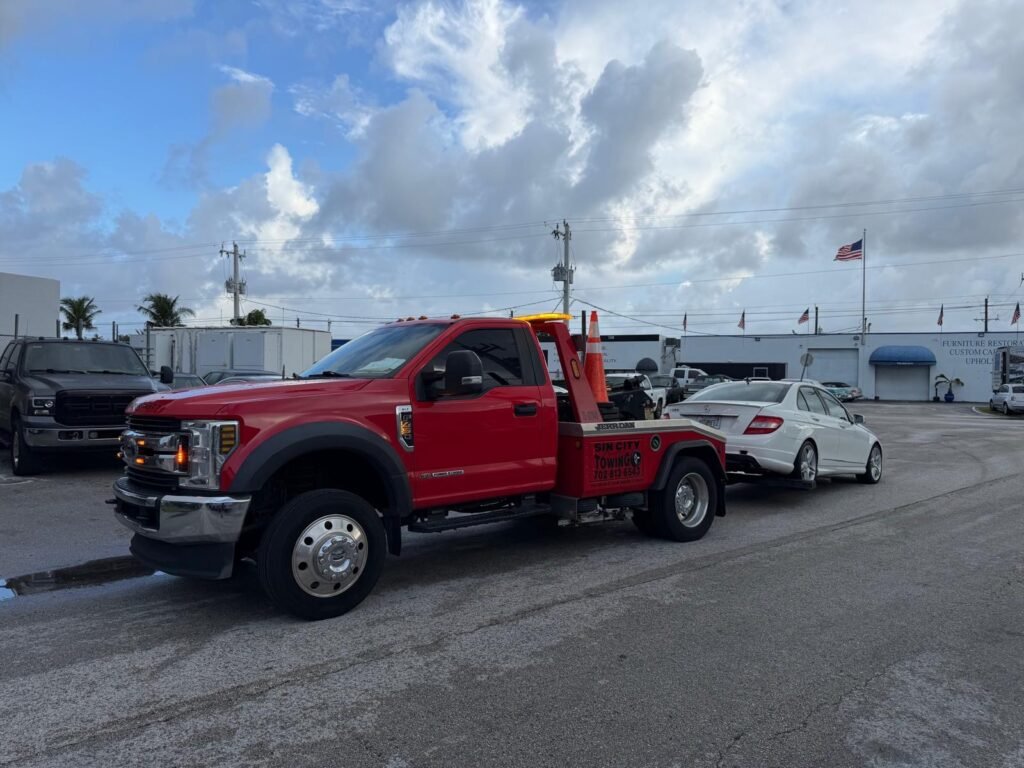
At Sin City Towing LLC, we’ve responded to countless calls from drivers who didn’t prepare for the Keys drive. We’ve rescued families on the Seven Mile Bridge, towed overheated vehicles near Islamorada, and helped drivers who ran out of gas on stretches with no services in sight. In this guide, we’ll share everything you need to know before making the drive—so you can enjoy the journey safely and without stress.
The Reality of the Overseas Highway
Before we dive into preparation tips, let’s talk about what makes the drive to the Keys unique.
It’s a Long, Remote Road
The Overseas Highway (US-1) stretches over 100 miles from Florida City to Key West. Large portions of it are over water, with no exits, no gas stations, and no services. If you break down in the middle of a bridge or a remote stretch, you’re miles from help.
Limited Services
Unlike driving through a city where there’s a gas station or mechanic every few miles, the Keys have limited services. Gas stations are fewer and farther between, and not all of them are open 24/7. Mechanics are concentrated in the larger towns like Key Largo, Marathon, and Key West.
Bridges and Elevated Roads
The Overseas Highway features 42 bridges, including the famous Seven Mile Bridge. These bridges have narrow shoulders and no easy pull-off areas. Breaking down on a bridge is dangerous and requires specialized towing equipment.
Weather Challenges
The Keys are exposed to intense sun, sudden storms, and high winds. Heat can cause overheating, and heavy rain can reduce visibility and create hazardous driving conditions.
Salt Air and Corrosion
The salt-laden air accelerates corrosion on vehicles. Tires, batteries, and electrical components are particularly vulnerable. If you’re not used to driving in a coastal environment, you might be surprised at how quickly salt air affects your vehicle.
Wildlife
The Keys are home to diverse wildlife, including iguanas, birds, and even alligators. Animals can appear on the road suddenly, causing drivers to swerve or brake abruptly.
Limited Cell Service
While cell coverage has improved, there are still stretches of the Overseas Highway with weak or no signal. If you break down, you might not be able to call for help immediately.
Before You Go: Vehicle Preparation
The best way to avoid a breakdown on the Keys drive is to prepare your vehicle before you leave Homestead.
Check Your Tires
Your tires are your most critical component for this drive. Inspect them carefully:
-
Pressure: Check tire pressure when tires are cold. Inflate to the manufacturer’s recommended PSI.
-
Tread: Use the penny test. If you can see Lincoln’s head, you need new tires.
-
Sidewalls: Look for cracks, bulges, or cuts.
-
Spare: Make sure your spare tire is properly inflated and in good condition. Check that you have a jack and lug wrench.
Test Your Battery
The heat is brutal on batteries, especially for the long drive to the Keys. Have your battery tested if it’s more than two years old. Clean the terminals and ensure connections are tight.
Check Your Cooling System
Overheating is one of the most common issues on the Keys drive. Make sure:
-
Coolant levels are full and the coolant is fresh
-
Radiator hoses are in good condition (no cracks or soft spots)
-
The radiator is clean and free of debris
-
The water pump is working properly
If your temperature gauge starts to rise, pull over immediately. Call for emergency towing South Florida services if needed.
Inspect Belts and Hoses
Rubber deteriorates in the heat. Look for cracks, fraying, or soft spots on your serpentine belt and hoses. A broken belt or hose can leave you stranded quickly.
Check Your Fluids
-
Oil: Check the level and condition. Change it if it’s due.
-
Brake fluid: Ensure it’s at the proper level.
-
Power steering fluid: Check and top off if needed.
-
Windshield washer fluid: Fill it up—you’ll need it on the highway.
-
Transmission fluid: Check the level and condition.
Test Your Air Conditioning
In the Florida heat, A/C is essential. If your A/C isn’t working well, get it checked before you leave. A long drive without A/C is uncomfortable and potentially dangerous.
Check Your Lights
Make sure all your lights are working:
-
Headlights (high and low beams)
-
Taillights
-
Brake lights
-
Turn signals
-
Hazard lights (essential for breakdowns)
Fill Your Gas Tank
Gas stations are fewer and farther between in the Keys. Fill your tank in Homestead or Florida City before you head out. Don’t wait until you’re low—you might not find a station when you need one.
Pack an Emergency Kit
Prepare for the unexpected with a comprehensive emergency kit:
-
Jumper cables or a portable jump starter
-
Spare tire, jack, and lug wrench
-
Flashlight with extra batteries
-
Reflective triangles or flares
-
High-visibility vest
-
Tire pressure gauge
-
Portable air compressor or tire inflator
-
Bottled water (at least a gallon per person)
-
Non-perishable snacks
-
First aid kit
-
Phone charger and power bank
-
Sunscreen and sunshade
-
Umbrella
-
Basic tool kit (wrenches, screwdrivers, duct tape, zip ties)
-
Paper map (in case your phone loses signal)
Save Our Number
Don’t wait until you’re stranded to search for roadside assistance Homestead services. Save Sin City Towing LLC in your phone before you leave. We’re available 24/7 and we know the Keys route well.
Route Planning Tips
Knowing the route and where services are located can make a big difference.
Know Your Route
The drive from Homestead to Key West is about 100 miles on US-1. Key points along the way include:
-
Key Largo (Mile Marker 105-90) – The first major Key, with gas stations, restaurants, and services.
-
Islamorada (Mile Marker 90-70) – Known for fishing and dining, with some services.
-
Marathon (Mile Marker 65-50) – A larger town with gas, mechanics, and services.
-
Big Pine Key (Mile Marker 35-30) – Smaller, with limited services.
-
Key West (Mile Marker 0-4) – The southernmost point, with full services.
Identify Gas Stations
Gas stations are concentrated in the larger towns. Notable stations include:
-
Key Largo: Several stations near MM 100-105
-
Islamorada: Stations near MM 80-85
-
Marathon: Multiple stations near MM 50-55
-
Big Pine Key: Limited options near MM 30-35
-
Key West: Full services at MM 0-5
Tip: Don’t let your tank drop below a quarter. If you see a gas station and your tank is half full, top off anyway. You never know when the next one will be.
Know the Bridges
The Overseas Highway has 42 bridges. The most notable are:
-
Jewfish Creek Bridge (MM 106) – The first bridge after leaving the mainland.
-
Channel 5 Bridge (MM 72) – A long bridge near Islamorada.
-
Seven Mile Bridge (MM 47) – The longest bridge at seven miles, with narrow shoulders.
-
Bahia Honda Bridge (MM 37) – A scenic but narrow bridge.
If you break down on a bridge, stay in your vehicle with your seatbelt on. Turn on your hazard lights and call for help immediately.
What to Do If You Break Down on the Overseas Highway
Even with the best preparation, breakdowns happen. Here’s what to do if you find yourself stranded.
Step 1: Pull Over Safely
If you notice any signs of trouble—warning lights, strange noises, or loss of power—pull over as soon as it’s safe. On a bridge, try to get to the end if possible. If you can’t, pull as far to the right as you can.
Step 2: Turn on Your Hazard Lights
Immediately. This alerts other drivers that you’re stopped and in distress.
Step 3: Stay Inside Your Vehicle
Your car is the safest place to wait. Stay inside with your seatbelt on. Lock your doors and keep your windows up. Do not stand outside, especially on a bridge or a narrow shoulder.
Step 4: Call for Help
Call Sin City Towing LLC at the first sign of trouble. We provide fast, reliable towing Homestead services and we know the Keys route. Our dispatchers will ask for your location (mile markers are very helpful) and send a driver to you.
Step 5: Provide Your Location
Mile markers are your best friend on the Overseas Highway. Look for small green signs on the side of the road. If you can’t find one, describe any landmarks, bridges, or nearby towns.
Step 6: Wait Safely
Stay in your vehicle. Keep your hazard lights on. If you have reflective triangles, place them behind your vehicle at a safe distance. Stay cool, stay hydrated, and wait for professional help.
Step 7: Don’t Accept Help from Strangers
While many people are well-intentioned, it’s safer to wait for a professional. We’re trained to handle roadside emergencies safely.
The Most Common Breakdowns on the Keys Drive
Based on our years of service, here are the most common issues drivers face on the Overseas Highway.
Overheating Engines
The combination of heat, highway speeds, and long distances is tough on cooling systems. Overheating is the number one issue we see.
Why it happens: Low coolant, clogged radiator, failing water pump, or a broken hose.
What to do: Pull over immediately. Shut off the engine. Wait for it to cool before opening the hood. Call for a tow.
Don’t: Keep driving. Don’t open the hood while the engine is hot. Don’t pour cold water on a hot engine.
Flat Tires and Blowouts
Debris on the road and heat-related tire failure cause many flats.
Why it happens: Nails, screws, potholes, or heat-related blowouts.
What to do: Pull over safely. If you have a spare and know how to change it, proceed. If not, call for roadside assistance Homestead.
Don’t: Drive on a flat tire. Stop in a dangerous location.
Dead Batteries
The heat is brutal on batteries, and the long drive can drain a weak battery.
Why it happens: Old battery, heat, or alternator failure.
What to do: Try a jump start if you have cables and a helper. If that doesn’t work, call for a tow.
Don’t: Keep trying to start the car repeatedly—it can damage the starter.
Running Out of Gas
Gas stations are fewer in the Keys, and it’s easy to misjudge the distance.
Why it happens: Not paying attention to the gauge, or assuming there will be a station sooner.
What to do: Pull over safely. Call for fuel delivery or a tow. We can bring you enough fuel to get to the nearest station.
Don’t: Walk to a gas station—it’s dangerous on the highway.
Electrical Issues
Salt air and humidity can cause electrical problems.
Why it happens: Corrosion, heat, or moisture.
What to do: Have the issue diagnosed by a mechanic. If the car won’t start, call for a tow.
Don’t: Ignore warning lights or flickering electrical systems.
Brake Issues
Long drives with stop-and-go traffic in the Keys can wear down brakes.
Why it happens: Worn pads, overheating, or brake fluid issues.
What to do: If you notice any brake issues, stop driving and call for a tow.
Don’t: Continue driving with compromised brakes.
Safety Tips for the Keys Drive
Here are some additional safety tips to keep in mind.
Drive During Daylight
The Overseas Highway is more beautiful—and safer—to drive during daylight hours. You’ll have better visibility of the road, wildlife, and any hazards.
Watch for Wildlife
Iguanas, birds, and other animals can appear on the road suddenly. Stay alert, especially in the early morning and evening.
Take Breaks
The drive is about 100 miles to Key West—about 2.5 to 3 hours without traffic. But traffic and stops can make it longer. Take breaks to stretch and stay alert.
Stay Hydrated
In the Florida heat, staying hydrated is essential. Bring plenty of water for everyone in the car.
Keep Your Phone Charged
Use a car charger or power bank. If you break down, you need your phone to call for help.
Don’t Use Cruise Control in Rain
If it’s raining, turn off cruise control. Hydroplaning can occur, and cruise control can make it harder to maintain control.
Slow Down on Bridges
Bridges can be windy and narrow. Reduce your speed and stay in your lane.
Enjoy the View—But Keep Your Eyes on the Road
The views are stunning, but they can be distracting. Pull over at designated scenic overlooks to take photos.
What to Keep in Your Car
Here’s a comprehensive checklist of what to pack for the Keys drive.
Vehicle Essentials
-
Spare tire, jack, and lug wrench
-
Jumper cables or portable jump starter
-
Tire pressure gauge
-
Portable air compressor
-
Basic tool kit
-
Duct tape and zip ties
-
Reflective triangles or flares
-
High-visibility vest
-
Flashlight and extra batteries
Personal Essentials
-
Bottled water (at least a gallon per person)
-
Non-perishable snacks
-
First aid kit
-
Phone charger and power bank
-
Sunscreen and sunshade
-
Umbrella
-
Hat and sunglasses
-
Blanket or towel
Important Documents
-
Driver’s license
-
Insurance card
-
Vehicle registration
-
Our number saved in your phone
Why Sin City Towing LLC Is the Right Choice
When you break down on the Keys drive, you need a towing company that’s fast, reliable, and familiar with the route.
We Know the Keys Route
Our drivers are experienced on the Overseas Highway. We know the mile markers, the bridges, and the best ways to reach you.
We’re Available 24/7
Breakdowns don’t happen during business hours. We’re available around the clock to help you.
We’re Fast
We understand that every minute matters when you’re stranded on a remote highway. We prioritize quick response times.
We Have the Right Equipment
We have flatbed trucks and other equipment to handle any vehicle, from sedans to SUVs to heavy trucks.
We’re Professional
Our drivers are experienced, licensed, and insured. We treat your vehicle with care and you with respect.
We’re Affordable
We believe in fair, transparent pricing. No hidden fees, no surprises.
We’re the Emergency Towing South Florida Service Drivers Trust
When you need help in a remote location, you want a company you can count on. We’re that company.
Real Stories from the Overseas Highway
Here are a few real calls we’ve received from drivers on the Keys drive.
The Overheated Car on the Seven Mile Bridge
A family was driving to Key West when their car overheated on the Seven Mile Bridge. They pulled over as far as they could and called us. We arrived quickly, towed them to a mechanic in Marathon, and they were able to continue their trip the next day.
The Flat Tire Near Islamorada
A driver hit a nail on the Overseas Highway near Islamorada. He had a spare but didn’t feel safe changing it on the narrow shoulder. He called us, and we arrived within 35 minutes to change his tire.
The Dead Battery at Key Largo
A couple stopped for lunch in Key Largo and found their car wouldn’t start when they returned. They called us, and we gave them a jump start. They made it to Key West without any more issues.
The Driver Who Ran Out of Gas
A driver misjudged the distance between gas stations and ran out of gas near Marathon. He called us, and we brought him enough fuel to reach the nearest station.
Final Thoughts
The drive from Homestead to the Florida Keys is one of the most beautiful road trips in America. But it’s also one that requires preparation. The remote stretches, limited services, and unique challenges mean you need to be ready for the unexpected.
By preparing your vehicle, packing an emergency kit, knowing the route, and having our number saved in your phone, you can enjoy the journey with confidence. And if something does go wrong, Sin City Towing LLC is here to help.
We’re the roadside assistance Homestead drivers trust for fast, reliable, and professional service. We’re available 24/7, we know the Keys route, and we’re committed to getting you back on the road safely.
Don’t wait until you’re stranded to think about roadside help. Save our number today. Prepare your vehicle. Drive safely. And enjoy the beautiful drive to the Florida Keys.
Need Help on the Keys Drive Right Now?
If you’re stranded anywhere between Homestead and the Florida Keys, don’t hesitate. Contact Sin City Towing LLC for prompt, professional, and affordable assistance. We are the towing Homestead and emergency towing South Florida service that never lets you down.
Call us now—we’re on our way!